Mastering RAG: Optimizing Prompt Context Windows for Vector Databases
Table of Contents
Share Article
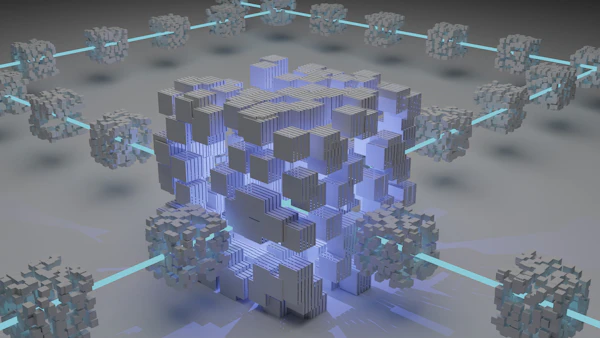
Retrieval-Augmented Generation (RAG) has emerged as the standard architecture to feed private documents to large language models. However, simply chunking text and dumping it into a vector database is not enough. To achieve high retrieval accuracy and avoid hallucinations, developers must optimize how prompt context windows are constructed, sorted, and parsed.
1. Document Chunking Strategies
Standard recursive character chunking often splits sentences mid-phrase, causing semantic information loss. To preserve contextual meaning, developers should use semantic chunking, which analyzes sentence boundaries and groups sections based on embedding density changes. Furthermore, using overlapping windows (e.g. 500-token chunks with 50-token overlap) ensures edge structures are captured correctly.
2. Vector Distance Metrics and Retrieval
Once document chunks are embedded, they are indexed in vector databases (like pgvector in Supabase). Choosing the right distance metric is crucial: Cosine Distance is preferred for normalized embeddings, while Dot Product offers faster compute times for normalized vectors. After retrieving top-K candidates, implementing a Cross-Encoder Reranker (like Cohere or BGE-Reranker) significantly improves relevance by scoring document-query pairs directly.
3. Context Window Stuffing vs. Selection
Stufing your prompt context window with too many chunks causes a phenomenon called 'Lost in the Middle', where LLMs ignore information situated in the center of long contexts. To mitigate this, restrict context sizes, order retrieved documents from most-relevant to least-relevant, and isolate queries using strict system prompts.
Conclusion
RAG performance is directly proportional to context quality. By utilizing semantic chunking, implementing cross-encoder rerankers, and formatting prompts clearly, developers can build RAG systems that provide extremely precise answers while minimizing token consumption.
Frequently Asked Questions
What is the Lost in the Middle problem?
It is the tendency of LLMs to focus on the beginning and end of long context windows, ignoring information placed in the middle.
Which vector database is best for RAG?
Popular choices include Pgvector (Supabase/PostgreSQL) for relational databases, and Pinecone, Milvus, or Qdrant for dedicated vector indexing.
Related Articles
Introduction to Model Context Protocol (MCP) in AI Development
Learn how the Model Context Protocol standardizes context sharing between LLM platforms and local developer workspaces.
Read articlePDF Accessibility: A Guide to Creating WCAG Compliant Documents
Learn how to structure PDF tags, document structure, color contrast, and alt text to meet international accessibility compliance standards.
Read article